
Repairs
Bath & Shower Resealing
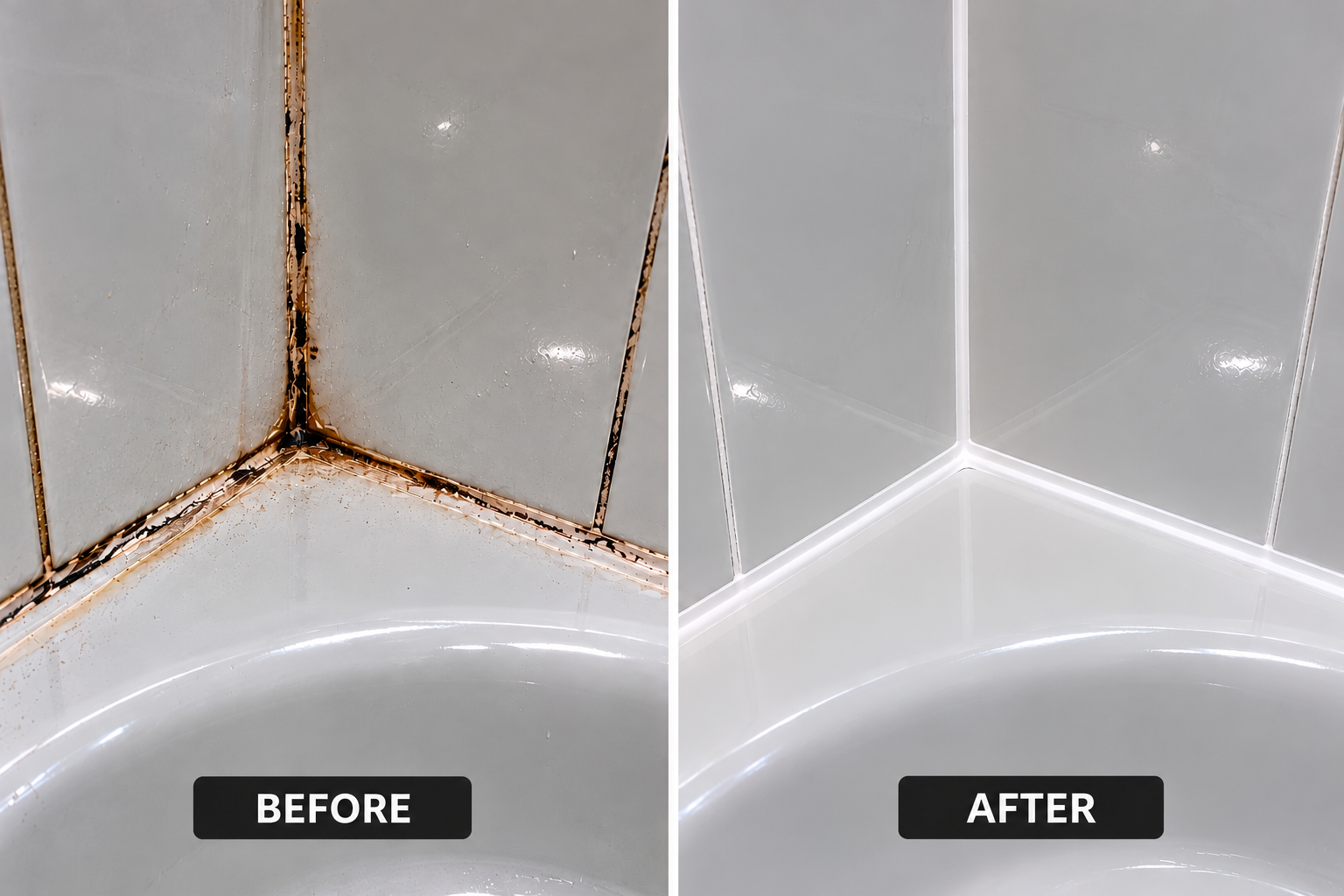
Silicone is the flexible seal where a bath, shower tray, basin or worktop meets the tiles. When it peels, cracks or goes black, water can get behind it. Resealing a bath or shower properly means taking the old seal out completely and starting again.
Why the joint is silicone, not grout
A bath or shower tray moves slightly every time it's filled or stood in, and walls and floors move with temperature and the seasons. Grout is rigid, so when it's used in the joint between a bath and the tiles it cracks along the bath edge. That joint is a movement joint and is filled with a flexible sanitary silicone sealant instead. The same applies to internal corners and where tiles meet a worktop or a shower tray.
Removing the old silicone
New silicone doesn't bond properly to old silicone, so siliconing over the top of an old seal usually fails quickly. The old seal is cut out and the remaining residue removed, so the joint is back to clean tile and a clean bath, tray or basin edge.
Cleaning and drying
Soap, limescale and mould in the joint stop new silicone sticking. The joint is cleaned, any mould treated, and the area left to dry fully before resealing. A damp joint is one of the most common reasons new silicone peels away.
Applying new sanitary silicone
A mould-resistant sanitary silicone made for bathrooms and kitchens is applied in a continuous bead and tooled to a neat, smooth finish. Many people fill the bath with water before it's sealed, so the seal is set with the bath at its lowest point and the joint isn't stretched the next time it's used. The silicone needs time to cure before the bath or shower is used: follow the manufacturer's instructions.
Why silicone goes black
Black marks in silicone are usually mould growing on soap residue and moisture. Good ventilation, wiping down after showers and a mould-resistant sanitary silicone all help. Once mould has grown into the silicone it can't be cleaned out properly, so the seal is replaced.
When resealing isn't enough
Replacing silicone does not repair failed tanking or hidden leaks. If tiles are loose, grout is crumbling, or there are signs of water damage such as stained ceilings below, swollen boards or a musty smell, the problem may be behind the tiles. Signs of water damage are assessed rather than simply covered over. For loose tiles and regrouting, see Tile, Grout & Seal Repairs.
Robert Rajz is an NVQ Level 3 tiler with 18 years' experience, based in West Ealing, W13. He holds a Gold CSCS card, is DBS checked and fully insured, and is rated 5/5 on MyBuilder and 10/10 on Checkatrade.
FAQ
Common questions
How often should silicone be replaced? +
There's no fixed interval. Replace it when it starts to peel, crack, come away from the bath or tiles, or shows mould that won't clean off.
Why does silicone go black? +
Usually because mould grows on soap residue and moisture. Ventilation and a mould-resistant sanitary silicone help, but mould inside the silicone means the seal needs replacing.
Can I silicone over old silicone? +
It's best not to. New silicone doesn't bond well to old silicone, so the old seal is removed completely and the joint cleaned and dried first.
Free quote
Tell us about your job
Tiling in West London?
Call Robert on 07427 725086 or request a free quote.
Based in West Ealing, W13. We cover North West London, South West London, Central London and North London. Other areas considered on request.
Area pages: West Ealing · Ealing · Isleworth · Putney · Wimbledon · Brixton · Lewisham · Hanwell