
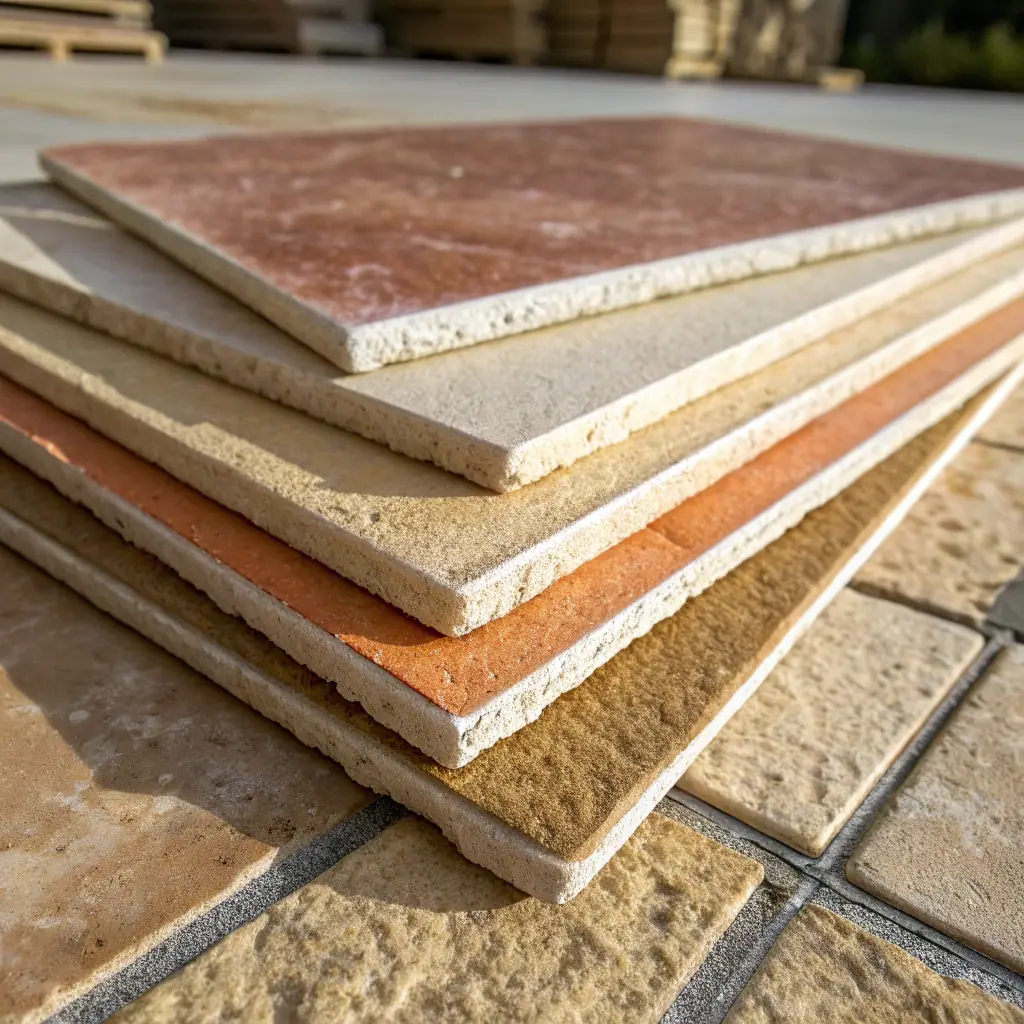
Natural stone
Natural Stone Tiling
Natural stone tiles such as travertine, slate and limestone give a room texture and warmth that's hard to copy. Each stone behaves differently, so the choice of stone, the fixing and the sealing all need to suit where it's going.
Travertine: filled or unfilled
Travertine tiles have natural holes and pits formed as the stone was created. Filled travertine has these holes filled at the factory, giving a smoother surface that's easier to clean. Unfilled travertine keeps its open, rustic texture, and some of the holes fill with grout during fixing. Tumbled travertine has softened edges and an aged look that suits rustic floors.
Slate: cleft surfaces and varying thickness
Slate tiles often have a natural cleft surface, which is textured and gives good grip, and they can vary in thickness from tile to tile. The adhesive bed is adjusted as each tile goes down so the finished surface sits flat. Slate colours vary too, so tiles are mixed from several boxes before fixing to spread the shades evenly.
Limestone
Limestone is usually softer and more even in colour, with a calm, natural look. It's more porous than many stones and can mark more easily, so it suits rooms where it will be sealed and looked after.
Sealing before and after grouting
Most natural stone is porous. It's usually sealed before grouting so grout doesn't stain the surface, then sealed again once the grout has cured. The sealer, the number of coats and how often to reseal depend on the stone: follow the manufacturer's instructions.
Natural stone is fixed with an adhesive suitable for natural stone, and lighter stones are often fixed with a white adhesive so it doesn't discolour them.
Looking after natural stone
Clean with a pH-neutral cleaner made for stone, and avoid acidic or harsh cleaners, which can damage the surface and strip the sealer. Wipe spills promptly, use mats at external doors to catch grit, and reseal when water stops beading on the surface.
Indoor and outdoor stone
Not every stone suits outdoor use. Outside, stone has to cope with frost, rain and algae, so choose a stone and thickness rated for external use, with frost-resistant adhesive and grout and falls so water drains away. Slate and some limestones and travertines are used outside, but check the supplier's guidance for each product. For marble, see Marble Tiling.
Robert Rajz is an NVQ Level 3 tiler with 18 years' experience, based in West Ealing, W13. He holds a Gold CSCS card, is DBS checked and fully insured, and is rated 5/5 on MyBuilder and 10/10 on Checkatrade.
FAQ
Common questions
Does travertine need sealing? +
Yes. Travertine is porous and is usually sealed before and after grouting, then resealed from time to time. Follow the sealer manufacturer's instructions.
Can slate go outside? +
Many slates can, if they're rated for outdoor use and frost. Outdoors they need a sound base, frost-resistant adhesive and grout, and falls so rainwater drains away.
How do I look after natural stone? +
Use a pH-neutral stone cleaner, avoid acidic or harsh products, wipe spills promptly and reseal when water no longer beads on the surface.
Free quote
Tell us about your job
Tiling in West London?
Call Robert on 07427 725086 or request a free quote.
Based in West Ealing, W13. We cover North West London, South West London, Central London and North London. Other areas considered on request.
Area pages: West Ealing · Ealing · Isleworth · Putney · Wimbledon · Brixton · Lewisham · Hanwell